
Breaking the Push/Crash Cycle
A self-paced, 30-day course designed to help people living with ME/CFS, Long COVID, POTS, MCAS, fibromyalgia, and related fatigue illnesses build greater stability through practical pacing.
You wake up feeling a little better than you did yesterday, so you decide it’s time to catch up. Maybe you answer emails, clean the kitchen, run an errand, spend time with family, or finally tackle the project that’s been waiting for weeks. It feels good to be doing something again. Then, a day or two later, everything catches up with you. You spend the next several days resting, wondering what happened and trying to recover enough to start over. Over time, that cycle can become exhausting in ways that go far beyond physical fatigue. You begin questioning your decisions, second-guessing your limits, and wondering whether you’ll ever learn where the line is. If you’re nodding your head as you read this, you may recognize some of these experiences.
You try to make the most of your good days, then spend the next few recovering.
You never quite know how much you’ll be able to do tomorrow.
You rest when you crash, but you’re never sure if you’re resting in a way that actually helps.
You feel guilty saying no, even when you know your body needs a break.
You’ve read so much advice that you’re no longer sure what applies to you.
You miss feeling confident in your own body.
If this feels familiar, you’re in the right place.
Over the next thirty lessons, we’ll take one step at a time. Rather than trying to change everything overnight, we’ll focus on small, practical changes that build on one another. The goal isn’t perfection. It’s creating a steadier way of moving through everyday life.
By the end of the course, you’ll have begun building:
A stable baseline.
A better understanding of what your body can comfortably sustain today.
Greater confidence.
More certainty when making everyday decisions instead of constantly wondering whether you’ve done too much.
Predictable routines.
Simple habits that support your energy and reduce the feeling of starting over after every crash.
A deeper understanding of your own patterns.
The ability to recognize your early warning signs and respond before a setback becomes a larger one.
Trust in your body again.
Not because your body has stopped communicating with you, but because you’ve learned to better understand what it’s been trying to say.


There was a time when every good day felt like an opportunity to catch up. If I woke up with a little more energy, I cleaned the house, answered emails, ran errands, saw friends, exercised, or worked on the projects that had been waiting for me. For a few hours, it felt like life was returning to normal.
Then came the crash.
At first, I believed I simply hadn’t found the right treatment yet. I kept looking for the thing that would finally allow me to live the way I had before I became ill. Along the way, I learned an incredible amount, but I also realized that knowledge alone wasn’t changing the pattern I kept finding myself in.
What finally began making a difference wasn’t one breakthrough or one perfect protocol. It was learning to slow down enough to understand my own body. I started noticing patterns.
I learned that pacing wasn’t about doing less. It was about doing the right amount. I began paying attention to the early signs that I was approaching my limits instead of waiting until I had already crossed them. Little by little, my days became more predictable, and with that predictability came something I hadn’t felt in a long time: confidence.
As I shared what I was learning with other people living with ME/CFS and related illnesses, I realized how many of us were asking the same questions. We weren’t looking for more information as much as we were looking for a practical way to apply it to our own lives.
That’s why I created Breaking the Push/Crash Cycle.
I wanted to build the course I wish someone had handed me when I was first trying to understand what my body needed. A course that moves gently, respects the realities of chronic illness, and helps you create something lasting: a better understanding of yourself.
My hope is that, when you reach the final lesson, you’ll leave with more than new knowledge. You’ll leave with greater confidence, a journal that’s uniquely yours, and a clearer sense of how to work with your body instead of feeling like you’re constantly working against it.
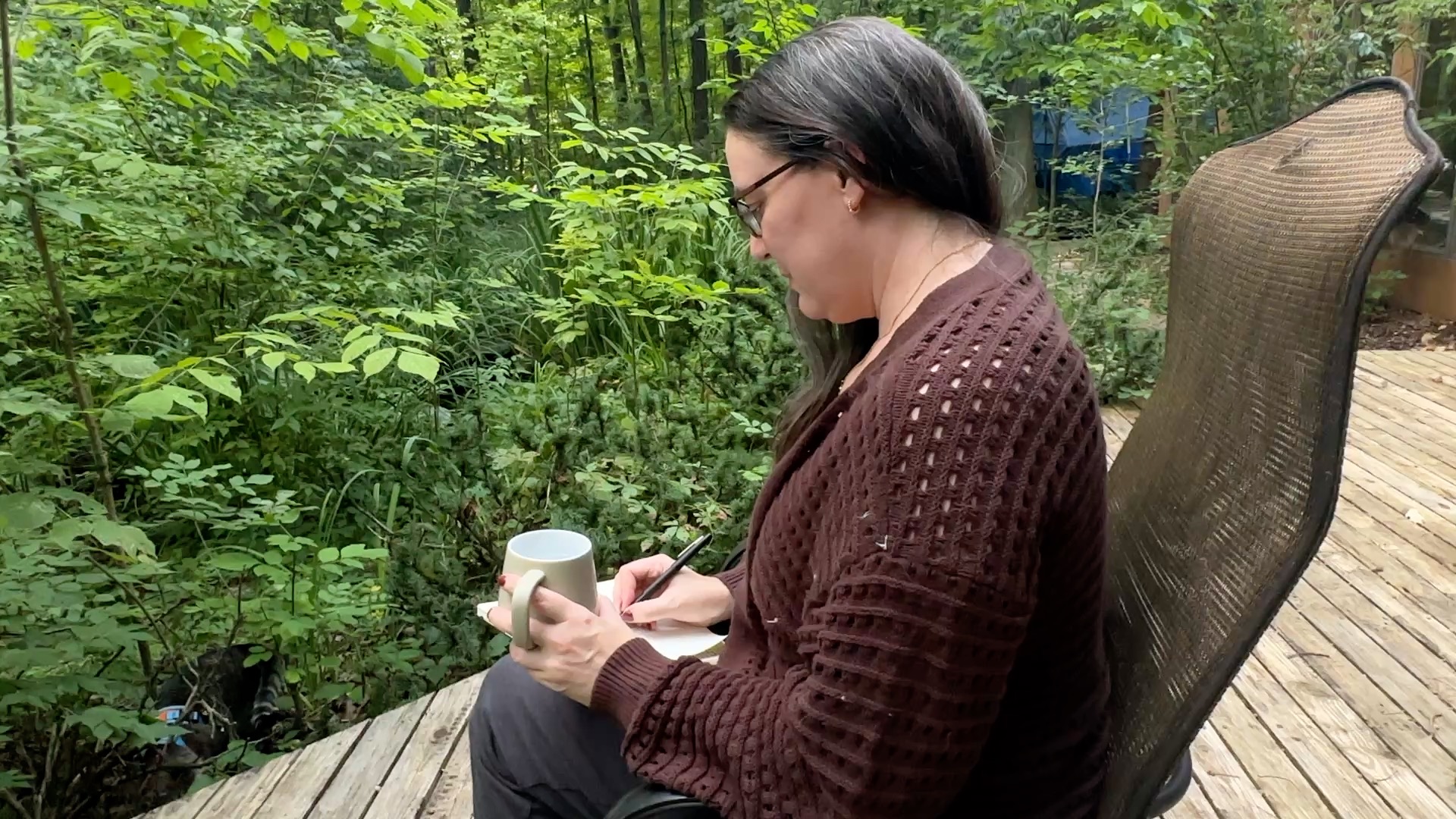
While this course is grounded in my own lived experience with ME/CFS and the practical pacing strategies that have helped me, I also wanted the educational content to reflect current clinical understanding.
For that reason, every lesson was reviewed and informed by Dr. Katie Brown, MD, an ME/CFS Specialist. Dr. Brown’s expertise helped ensure that the course aligns with current pacing principles while remaining practical, compassionate, and accessible for everyday life.
Together, we’ve combined lived experience with clinical insight to create a course that is thoughtful, evidence-informed, and designed to meet you where you are.
This course was created for people living with ME/CFS and is also appropriate for many people with Long COVID, POTS, fibromyalgia, and other fatigue-based illnesses where pacing plays an important role. If you’re looking for a practical, step-by-step approach to understanding your energy limits and creating more sustainable routines, this course was designed with you in mind.
No. The course is organized into thirty daily lessons because each lesson is designed to feel manageable, but you’ll have lifetime access and can move through it at whatever pace feels right for your body. Some people may complete a lesson each day, while others may spread the course over several months. There is no falling behind.
Most lessons are designed to fit comfortably into your day without becoming overwhelming. The videos are intentionally kept concise, and each lesson also includes written notes, a journal prompt, and optional wellness resources that you can return to whenever they’re helpful.
Many students come into the course with a solid understanding of pacing in theory. The difference is putting that knowledge into practice in a way that fits your own life. Throughout the course, you’ll create a personalized journal that helps you recognize your own patterns, identify what supports your energy, and build a pacing approach that’s based on your experiences rather than general advice.
That’s actually one of the reasons I created this course. I wanted to build the guide I wish someone had given me when I was first trying to understand what my body needed. Whether you’re just beginning your journey or you’ve been living with chronic illness for years, the course meets you where you are.
Your enrollment includes lifetime access to all thirty lessons, downloadable journal prompts, heart rate pacing guidance, restorative wellness resources including links to my favorite meditations, breathing exercises, restorative yoga and sleep support, access to the course community, and all future updates to the course.
No. This course does not promise recovery or symptom elimination. Its purpose is to help you better understand your body, develop practical pacing skills, reduce the push/crash cycle, and make everyday decisions with greater confidence.
You’ll have lifetime access to the course. You can revisit any lesson whenever you need a refresher, return to your journal, or work through the material again as your needs change over time.
Yes. We want you to feel confident in your purchase. If you find that Breaking the Push/Crash Cycle isn’t the right fit, you may request a full refund within 14 days of purchase, provided you’ve completed no more than 20% of the course.
Instructions for Downloading the Thinkific App on Your Phone
Stop Everything & Rest
The Push/Crash Cycle & Why You Feel Stuck
What is Baseline & Why You Need It
Nervous System Overdrive - How to Shut It Down
Making Symptom Tracking Work For You
Creating an Energy Friendly Home
First Baseline Check-In
The Energy Bank Account - How to Budget Energy Without Crashes
Heart Rate Monitoring - Using Data to Prevent Crashes
Understanding Post-Exertional Malaise (PEM)
Structuring a Pacing Friendly Day
Energy-Saving Strategies - Small Changes, Big Impact
Sleep and Recovery
Pacing Check-In - Adjusting Based on What's Working
Why Stress is Stealing Your Energy
Saying No Without Guilt
Grieving Lost Abilities Without Losing Hope
Finding Joy Within Limitations
Communicating Your Needs to Others
Managing Anxiety About the Future
Baseline Check-In - Evaluating Emotional & Physical Stability
Reintroducing Movement Without Triggering PEM
Nutrition & Hydration for Energy Stability
Creating a Sensory-Friendly Environment
Why Recovery isn't Linear - Adjusting Expectation for the Long-Term
Preparing for Your Next Medical Assessment
Recognizing Progress - Even When It Feels Slow
Planning for Long-Term Stability & Future Adjustments
When Life Throws You Off Track
Graduation - What Comes Next?

Living with chronic illness asks a great deal of us. It asks us to be patient when we’d rather be making progress, flexible when our plans suddenly change, and compassionate with ourselves on days that don’t unfold the way we hoped.
Over these thirty lessons, we’ll spend time getting to know your body a little better. You’ll learn to recognize patterns, practice new pacing strategies, and gradually build a journal that reflects your own experiences. As those pages fill, you’ll have something tangible to return to whenever you need a reminder of what you’ve learned about yourself.
My hope is that the course becomes a quiet companion along the way. One that helps you approach each day with a little more understanding, a little more confidence, and the reassurance that you don’t have to figure everything out all at once.
Breaking the Push/Crash Cycle is now open for enrollment for $149, with lifetime access to the complete course. You can move through the thirty lessons at your own pace and return to the material whenever it's useful.
If this feels like the right next step for you, I’d be delighted to welcome you into the course.